For information about the
protocols for sending questions to the TRADITIO Fathers, click on Ask the Fathers.
If you wish to support the TRADITIO Network's Apostolate, click on the TRADITIO Network's home page and see the
options provided in the "Make a Donation to the TRADITIO Network's
Apostolate" section toward the bottom of the home page.
For Gregorian chant recordings of the fully-traditional
Traditional Latin Roman rites corresponding
to the season, click on Gregorian
Chant.
For a free subscription to TRADITIO's RSS News Feed listing the
most current Daily Commentaries, enter
"https://www.traditio.com/rssfeed.xml"
into your Yahoo, Google, Microsoft, or other news aggregator.
MAY 31, 2026 - TRINITY SUNDAY
DOUBLE FEAST OF THE FIRST CLASS
"The Holy Trinity" (1560)
By Marcellus Coffermans (ca. 1525-1581)
Oil on Panel, size not given
Iglesia de la Anunciacion, Seville, Spain
"Euntes ergo docete omnes gentes:
baptizantes eos
in nomine Patris, et Filii, et Spiritus Sancti"
[Going therefore, teach ye all nations;
baptizing them
in the name of the Father, and of the Son, and of the Holy Ghost."]
Matthew 28:19
From the Gospel of the Feastday
May 30, 2026 - Pentecost Saturday - Ember Saturday
Semidouble Feast
Fellayite Neo-SSPX Avoids Confrontation with the Apostate Newchurch of the New Order
Appoints Four Neophyte Non-entities to Become New Bishops of Its Sect
From: The TRADITIO Fathers
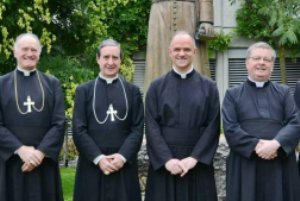
The Original Four Bishops Consecrated
By the Venerable Archbishop Marcel Lefebvre
Galarreta, Williamson, Mallerais, and Fellay
The Second and Third Are Now Deceased
The Four New Bishops Appointed
Are All Non-entities, Young, and Sycophantic
Perfect Puppets for Fellay & Co.
Who Still Want to Be Part of the Apostate
Synodal Newchurch of the New Order
Which Most Certainly Is NOT the Catholic Church
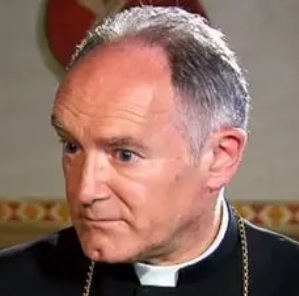
The names of the people to be consecrated new bishops for the Neo-SSPX on July 1, 2026, were announced on May 26: Pascha Schreiber, Michael Goldade, Michel Poinsinet de Sivry, and Marc Hanappier. Four unknowns. No Davide Pagliariani, no Franz Schmidberger, no Paul Morgan. Oh, wait, the experienced Paul Morgan, District Superior of Great Britain, Ireland, and Scandanavia. abandoned the Neo-SSPX in 2017 because he took the moral position that the Neo-SSPX had been accepting "couples" divorced and remarried in Newchurch after receiving euphemized "annulments" from the Novus Ordo sect.
In addition, these people are quite young: 53, 45, 42, and 35, respectively, barely meeting the minimum canonical age requirement. It is patent what the Neo-SSPX is trying to pull off here. Fellay & Co. don't want to confront the apostate Newchurch any more than it has to; thus, it appointed people who have a tabula rasa that will not provoke the counterfeit Newpope Prevost-Leo. Moreover, the ages of these people are so far below the traditional age for a bishop that the Neo-SSPX doesn't have to lock horns with Newvatican again for a long period.
Finally, these neophytes are unlikely to stand up to the de facto leader of the Neo-SSPX, Bernie Fellay, 68, especially as they have been nursed only in the rarified atmosphere of the Neo-SSPX itself. They will simply follow orders from their elder bishop.
Traditional Catholics, the original Society of St. Pius X (SSPX), reorganized by Bernie Fellay in 1994 from its original traditional form into a pro-Newchurch dictatorship after the death of the venerable Archbishop Marcel Lefebvre, is a leopard that hasn't changed its spots. It still wants to join the Synodal Newchurch of the New Age, but it was forced by overtaking fate into proceeding with the new consecrations because otherwise it would die off. Two of its original bishops (Richard Williamson and Tissier de Mallerais) have already died, and the two remaining bishops (Bernie Fellay and Alfonso de Galarreta) are in their later years. The Neo-SSPX is still the same as ever, sycophants to the Synodal Newchurch of the New Age, even submitting the new names to Newvatican for its "approval," even though Newchurch most certainly is NOT the Catholic Church, just as Archbishop Lefebvre proclaimed.
May 29, 2026 - Pentecost Friday - Ember Frirday
Semidouble Feast
Counterfeit Newpope Prevost-Leo Appoints a Three-time Illegal-alien Criminal
To Become His Newbishop of Wheeling-Charleston, West Virginia
From: The TRADITIO Fathers
The Face of Counterfeit Newpope Prevost-Leo's
Latest Off-the-Rails Newepiscopal Appointment
Foisted off on Wheeling-Charleston, West Virginia
The Man Is Criminal, Who Three Times
Broke across the U.S. Border from El Salvador
And Was Returned to His Native Country
Under Mysterious Circumstances
He Gained U.S. Citizenship
Probably through the Machinations
Of the Notorious Paedophile
Newcardinal Theodore McCarrick
Who "Installed" Him as a Presbyter
It seems that the counterfeit Newpope Prevost-Leo is hanging himself by his own petard -- again. He has torched Catholic and Thomastic moral teaching about the rights of countries and appointed on May 1, 2026, an illegal alien as Newbishop of Wheeling-Charleston, West Virginia. Evelio Menjivar-Ayala, known for his Leftist politics, has led demonstrations in Washington, D.C., against the very country that he contumelious broke into.
El Salvadorian Menjivar-Ayala attempted three times to enter the United States illegally and was deported. He connived to be "installed" as a Newchurch presbyter by the paedophile Newcardinal Theodore McCarrick. It was probably the notorious McCarrick, his "installer" into the Novus Ordo presbyterate who connived to get him U.S. citizenship.
Yet it is this ex-El Salvadorian whom the counterfeit Newpope Prevost has appointed and added to his list of corrupt appointments of Leftist political creatures, who have barely any Newchurch odor suffusing them, let alone a whiff of true Catholicism. [Some information for this Commentary was contributed by the American Spectator.]
Traditional Catholics, counterfeit Newpope Prevost-Leo is often described in the Leftist press as an "American," without reference to the fact that he turned his back on his original native country to become a citizen of Peru, a Left-leaning country, in 2015. Prevost has deliberately engaged in what has been described as "an abominable butchering and subverting of the Catholic Church’s perennial teachings on national sovereignty, borders, culture, immigration, and the obligations immigrants have to their new home countries." Apostate Newpopes Montini, Wojtyla, Ratzinger, and Bergoglio may have fallen off the edge of Catholicism, but in just one year Prevost seems to have careened right into the pit!
May 28, 2026 - Pentecost Thursday
Semidouble Feast
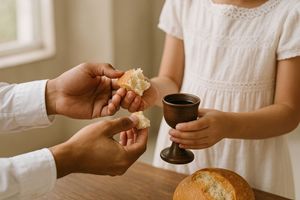
Newchurch Has Begun to Delegate Formally to Children the Handing Out
Of Novus Ordo "eucharist," Counterfeit Cookies and Kool-Aid
From: The TRADITIO Fathers
Children, Formally Delegated by Newchurch
Are Now Handing out Novus Ordo
The Counterfeit "eucharist" Cookies and Kool-Aid
As Newchurch Begins to Use Children
To Hand out What More than 80 per Cent
Of Newchurchers Themselves
Do Not Believe Is the Real Presence of Christ
All This Is Done with the Connivance
Of Apostate Newpopes, Newcardinals
Newbishops and Presbyters
Who Don't Believe in the Catholic Faith
Any More than Their Novus Ordo Congregations
The Synodal Newchurch of the New Order does not have a priesthood (jettisoned in 1968 in favor of a Protestantized "installation rite for presbyters) or a Mass (jettisoned in 1969 in favor of a Protestant-Masonic-Pagan "New" Mess) or Holy Communion, what Newchurch calls "eucharist" (not "Eucharist," let alone "Holy Eucharist"), not even actually valid bread, but a cookie, as published Novus Ordo recipes make clear.
According to polls of Newchurchers, upwards of 80 per cent do not even believe that their "eucharist" is the Real Presence of Christ. The very actions of Newchurchers prove that they doesn't believe in the Catholic Faith. They take the Novus Ordo cookie into their filthy hands that have just been used to pick their nose. They trample on the cookie crumbs that fall onto the floor. They swill the Kool-aid that isn't even Biblical wine.
Now Newchurch has doubled down on its apostasy by approving children handing out Novus Ordo "eucharist" from plastic bowls, though nothing is supposed to touch real Holy Communion but the gold of the chalice. The children were "formally delegated" by Newchurch to perform this sacrilege (if the cookies had actually been valid). The incident was caught on camera in Holy Heart of Jesus Newparish in Rio Grande on April 7, 2026,although similar sacrileges are undoubtedly going on all over the world. [Some information for this Commentary was contributed by LS News.]
Traditional Catholics, the presbyter involved was not a renegade. His Newbishop approved the sacrilege. Anyone who thinks that Newchurch has valid "eucharist" must have a screw loose. You may as well skip Newchuch altogether and get your Sunday cookies from Mrs. Fields! Such incidents only prove that the Synodal Newchurch of the New Order most certainly is NOT the Catholic Church, and its apostate Newpopes, Newcardinals, Newbishops, and presbyters are most certainly NOT Catholic clergy.
May 27, 2026 - Pentecost Wednesday - Ember Wednesday of Pentecost
Semidouble Feast
A Reader Asks: "If the Neo-Society of Pius X is 'Excommunicated' from Newchurch
Who Exactly Are Those Slated to Be Novus Ordo 'Excommunicated'?"
From: Tim
Neo-SSPX Officers
Slated to Be Novus Ordo "Excommunicated"
From the Synodal Newchurch of the New Order
On July 1, 2026
Bernie Fellay, Alfonso Galaretta
David Pagliarani, Christian Bouchacourt
The Current Contretemps between the Neo-SSPX
And the Synodal Newchurch Gives the Neo-SSPX
Yet Another Opportunity to Break Once and for All
With the Counterfeit Synodal Newchurch
Which Most Certainly Is NOT the Catholic Church
Dear TRADITIO Fathers:
It seems at this point that the Synodal Newchuch of the New Order will Novus Ordo "excommucate" the Fellayite Neo-Society of St. Pius X on July 1, 2026, when it most likely proceeds to consecrate additional bishops without counterfeit Newpope Prevost-Leo's approval. When that happens, who exactly are those slated to be "excommunicated" from Newchurch: the consecrating bishops? the consecrated bishops? all members of the Neo-SSPX?
THE TRADITIO FATHERS REPLY.
As of Pentecost Sunday 2026, it seems that both sides have hardened their positions in the Newchurch-Neo-SSPX contretemps. The Fellayite Neo-SSPX has to proceed with the episcopal consecrations on July 1, 2026, at Econe, Switzerland, or it will disintegrate, with two of its four bishops now deceased and the remaining two aging. The Synodal Newchurch of the New Order on its part has made it clear via counterfeit Newpope Prevost-Leo and his spokesman, Doctrinal Prefect Victor Fernandez, that if the Neo-SSPX proceeds with the consecrations, Novus Ordo "excommunications" will be enforced.
According to Newvatican, the consecrating bishops (Bernie Fellay and Alfonso de Galarreta) and the consecrated bishops (to be named on or around June 1, 2026) will definitely be "excommunicated." from the Synodal Newchurch, as well as Superior General Davide Pagliarani and General Councillor Christian Bouchacourt. Newvatican views such unapproved episcopal consecrations as constituting a schism, so all Neo-SSPX clergy and lay adherents would be technically "excommunicated."
How "excommunications" of these adherents would be applied is somewhat unclear at this point, but Newvatican's initial indications are that local Newdiocesan bishops would have a prominent role. Therefore, many Newdiocesan bishops are expected to issue decrees of Newchurch "excommunication" against all individual adherents, as some have stated to do already.
How should truly Traditional Catholics regard all of this contretemps? They should remember that the counterfeit Synodal Newchurch of the New Order most certainly is NOT the Catholic church, but a separate apostate sect formed on September 21, 1964, at the Protestant-Masonic-Pagan Vatican II Anti-council. Newchurch can be regarded as the same, or worse, than, e.g., the Arch-heretic Martin Luther's Lutheran sect. Thus, any "excommunications" are null and void as far as the true Catholic Church is concerned, which is now being perpetuated in Traditional Catholic churches, chapels, and oratories in thousands of sites around the world entirely independent of the apostate Newchurch.
The good news is that, because the Fellayite Neo-SSPX should have officially severed any ties with the apostate Newchurch long ago, this contretemps will afford the Neo-SSPX yet another opportunity to do the right thing, to confront the reality that the Synodal Newchurch of the New Order most certainly is NOT the Catholic Church and its apostate Newpopes are counterfeit.
That is what the original traditional SSPX's founder, Archbishop Marcel Lefebvre believed. The current Neo-SSPX leadership should be jettisoned, and a new Superior General not selling out to the apostate Newchurch selected, someone like the former British Superior, Fr. Paul Morgan, whom Fellay expelled because of his refusal to sell out to the Newchurch.
In any case, no true Catholic would want to have anything to do with the counterfeit Synodal Newchurch of the New Order or the Neo-SSPX, so what difference do Prevost-Leo's fulminations make? They should be spurned for the fakery they are.
MAY 26, 2026 - PENTECOST TUESDAY
DOUBLE FEAST OF THE FIRST CLASS
"Saints Peter and John Healing the Lame Man" (1655)
By Nicolas Poussin (1594-1665)
Oil on Canvas, 125.7 x 165.1 cm
Metropolitan Museum of Art, New York, New York
"Cum autem audissent Apostoli, qui erant Jerosolymis,
quod recepisset Samaria verbum Dei,
miserunt ad eos Petrum et Joannem.
Qui cum venissent, oraverunt pro ipsis
ut acciperent Spiritum Sanctum."
[Now when the apostles, who were in Jerusalem,
had heard that Samaria had received the word of God,
they sent unto them Peter and John.
Who, when they were come, prayed for them,
that they might receive the Holy Ghost.]
Acts 8:14-15
From the Epistle of the Feast
MAY 25, 2026 - PENTECOST MONDAY
DOUBLE FEAST OF THE FIRST CLASS
"St. Peter Preaching" (1541)
By Masolino da Panicale (1383-1447)
Fresco, 255 x 162 cm
Cappella Brancacci, Santa Maria del Carmine, Florence, Italy
"Aperins Petrus os suum, dixit:
Viri fratres, nobis praecepit Dominus
praedicare populo, et testificari,
quia ipse est qui constitutus est a Deo
iudex vivorum et mortuorum."
[And Peter opening his mouth, said:
Brethren, the Lord commanded us
to preach to the people, and to testify
that it is he who was appointed by God,
to be judge of the living and of the dead.]
Acts 10:34, 42
From the Epistle of the Feast
MAY 24, 2026 - PENTECOST SUNDAY
DOUBLE FEAST OF THE FIRST CLASS
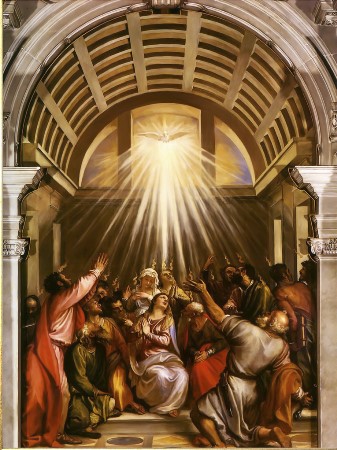
"Pentecost" (1541)
By Tiziano Vecellio (Titianus, Titian) (ca. 1477-1576)
Oil on Canvas, 275 x 127 cm
Formerly in the Friary of Santo Spirito, Venice, Italy
"Cum complerentur dies Pentecostes
erant omnes discipuli in eodem loco:
et factus est repente de caelo sonus,
tamquam advenientis spiritus vehementis:
et replevit totam domum ubi erant sedentes."
[And when the days of the Pentecost were accomplished,
they were all together in one place:
And suddenly there came a sound from heaven,
as of a mighty wind coming,
and it filled the whole house where they were sitting.]
Acts 2:1-2
From the Epistle of the Feast
May 23, 2026 - Vigil of Pentecost
Oecumenical Maniac Newpope Prevost-Leo Offers "Full Communion" to Heretic Sect
Led by Pope Twandros II, to Join Prevost's Synodal Newchurch of the New Order
From: The TRADITIO Fathers
Pope Twandros II
The Next "Pope" of the Synodal Newchurch
Now Led by Apostate Newpope Prevost-Leo
Prevost Has Now Offered "Full Communion"
To Two Heretic Monophysite Sects
Which Do Not Accept the Basic Nicene Creed
Prevost also Discussed with Pope Twandros
The Calling of a Vatican III Anti-council
In a May 10, 2026, letter, apostate Newpope Prevost-Leo offered "full communion" with the Synodal Newchurch of the New Order to Tawandros II, Pope of the Coptic Orthodox Church. (Many are unaware that there are two popes in the world. The Coptic Orthodox Pope derives from the early community of Christians in Alexandria, Egypt, see of St. Mark the Evangelist.) The word "Coptic" derives from a corruption of Aegyptos, the Greek word for Egypt.
Even though the Copts are heretics, denying the Council of Nicaea and holding the heresy of only one nature in Christ (the Monophysite heresy), Pope Tawandros II had more Christianity than counterfeit Newpope Bergoglio-Francis and broke off relations with Newchurch when Bergoglio issued his 2023 declaration "Fiducia supplicans," permitting, even encouraging, the blessing of "homosexual couples."
Eight days later, on May 8, 2026, Prevost held a private meeting with His Holiness Aram I, Patriarch of the Armenian Orthodox Church, another Monophysite heretic, in which Prevost discussed the convening of a Vatican III Anti-council. Prevost, however, kept that subject a secret out of the Newvatican press release. However, the Patriarch published the information in the Armenian press release. [Some information for this Commentary was contributed by Vatican News.]
Traditional Catholics, with all the schmoozing that the apostate Newpope Prevost-Leo is doing with the Monosphysite heretics of the East, the question arises whom Prevost will next invite to "full communion" with his counferfeit Synodal Newchurch of the New Order, which most certainly is NOT the Catholic Church: infidel Jews and Muslims, pagan Hindus and Buddhists? Atheists, favored by his mentor Newpope Bergoglio-Francis called his "best friends"?
May 22, 2026 - Ferial Day
As Newchurches All across Europe Are Emptying Out
The Newchurch "Corporation" Is Selling off Once-Catholic Historic Churches to Become Supermarkets
From: The TRADITIO Fathers
As New Mess Attendance in Europe Plummets
Newchurch Is Selling off Historic Churches
To Become Supermarkets
Or Restaurants or Wine Bars
Like Sint-Anna Church in Ghent, Belgium
Which Will Reopen as a Delhaize Supermarket
In the Autumn of 2027
All across Europe Newchurches are emptying out. Newchurchers are sick of 60 years of the apostate Vatican II Anti-council's "New Messes," "New Sacraments," "New Bibles," and similar never-ending counterfeits. Pre-conciliar religious communities, deprived of their Catholic foundations, are shrinking to nothingness. Some churches are just being abandoned. Others are being desecrated to secular purposes. In Europe many of these pre-conciliar churches are historic. What to do with them?
In the Belgian city of Ghent, for example, the 19th-century Sint-Anna Church is being "redeveloped" into a supermarket, restaurant, and wine bar, to open in the autumn of 2027. The Belgian supermarket chain Delhaize undoubtedly has its eye on other lucrative abandoned Newchurch properties. [Some information for this Commentary was contributed by the National Catholic Register.]
Traditional Catholics, what a disaster the apostate Newchurch of the New Order, which most certainly is NOT the Catholic Church, has perpetrated upon the world. Not only in the virtual destruction of the historical Traditional Latin Mass that bears in itself 2,000 years of Western culture but also in the great architecture -- Classical, Romanesque, and Gothic -- that built so many magnificent churches and cathedrals. The Philistines of the Bible could not have done a better job in their work of destroying the cultural and spiritual heritage of the real Roman Catholic Church.
May 21, 2026 - Octave Day of the Ascension of Our Lord
Double Major Feast
Newchurch's "New Bible" Is Full of Errors
The 2027 Catholic American Bible Whitewashes Sodomy and Other Grave Moral Sins
From: The TRADITIO Fathers
In 2027 Newchurch Is Slated to Roll out a "New Bible"
Like the Corrupt New American Bible
Used in Novus Ordo Churches since 1970
After the Vatican II Anti-council
This "New Bible" Has Whitewashed Grave Sins
Like Sodomy, Bigamy, and the Like
In Line with Counterfeit Apostate
Newpope Prevost-Leo's "New Theology"
It Will Dovetail Nicely
With the "New Mess" and the "New Sacraments"
After the Vatican II Anti-council (1962-1965), the Newchurch of the New Order, which most certainly is NOT the Catholic Church, issued in the United States a "New Bible" one year after the New Mess of 1969. This "New Bible" it called the New American Bible. In 1970 this "New Bible" was introduced for the New Mess and in 2002 became obligatory for all New Messes.
On Ash Wednesday, February 10, 2027, this New American Bible, corrupt as it is, is going to be replaced by an even more corrupt Catholic American Bible, which features a whitewash of the grave sin of sodomy, one of the Biblical Four Sins that Cry out to Heaven for Retribution, as well as of other grave moral sins, by "translating away" these sins, e.g., in 1 Corinthians 6:9 and 1 Timothy 1:10, in a process known as "gaywashing." This "New Bible" fits in quite well with the counterfeit apostate Newpope Prevost-Leo's new campaign to "go soft" in his Synodal Newchurch on sodomy, bigamy, and the like, already introduced by his mentor and predecessor, the counterfeit apostate Newpope Bergoglio-Francis.
These fake "translations" have also a financial motive, which is little more than simony. Newchurch, which is going bankrupt in the United States, with already one-fifth of all Newdioceses now in bankruptcy, selling off their Newparishes, to pay off judgments for their presbyters' and Newbishops' sex crimes against children. Newchurch is desperate for money, so it is avaracious for the over 2,000,000 USD that its fake Biblical "translations" rake in. The U.S. Conference of Catholic [Sic] Bishops [Sic] even charges its own Newparishes a "license fee" for quoting its copyrighted Bible in their bulletins! [Some information for this Commentary was contributed by Aletheia.]
Traditional Catholics, you had better brush up on your Latin, so that you can read the official traditional version of the Bible, St. Jerome's Latin Vulgate, approved by the dogmatic Council of Trent to infallible in faith and morals. If your Latin isn't up to it, be sure to use in English the venerable Douay-Rheims version, which is based upon the infallible Latin Vulgate.
May 20, 2026 - St. Bernadine of Siena, Confessor
Semidouble Feast
The Once-venerable Benedictine Order Goes "Gay" in Newchurch
The Order Officially Hosted and Funded "Drag Show Olympics"
From: The TRADITIO Fathers
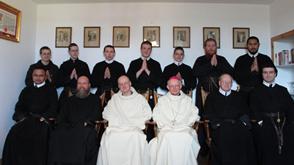
Newchurch's Benedictines
Are Now Sponsoring "Drag Shows"
The Mindless Modernist Benedictines
Who Have Severed Their Connection
With the Great St. Benedict of Nursia
The Savior of Catholic
And Western Civilization
During the Dark Ages
Are Attempting to Return
The Counterfeit Synodal Newchurch
To the Dark Ages Once Again
The Benedictine Order was founded by St. Benedict of Nursia to preserve classical and religious knowledge and writings after the fall of Rome to the barbarians. The Saint knew that the Roman Catholic Church would flower again centuries later, so he founded the scriptoria in the monasteries that would preserve that knowledge. The Saint was entirely correct. The writings that were preserved became the foundation of the renaissance of the Church in the High Middle Ages, producing such lights as St. Thomas Aquinas, St. Bonaventure, and St. Albertus Magnus.
The Saint must now be turning over in his grave. His great order, once known for its learning, has become, under the corruption of the Newchurch of the New Order, which is most certainly NOT the Catholic church, the impresario for homosexual drag shows. Corruptio optimi pessima.
On April 18, 2026, Minnesota Benedictine St. John's University and the College of St. Benedict hosted "Drag Show Olympics." The show was produced under the direct oversight of the Benedictine institutions and received funding from those institutions. The show starred performers named "Momo," "Rat Lord," and Hellrazor." [Some information for this Commentary was contributed by Alpha News.]
Traditional Catholics, if the Benedictines wanted to summon the demons of Hell, it seems that they got what they wanted. All Hell broke loose after the show, when the schools were excoriated for what was no less than a demonic production. Yet the mindless modernist Benedictines maintained that the drag show did not violate any campus policies, but that the show was "in line with our Benedictine values. Apparently, those values are now the exact opposite of the traditional Catholic values of St. Benedict of Nursia, who founded the order.
May 19, 2026 - St. Peter Celestine, Pope & Confessor
Semidouble Feast
Once-Catholic Ireland Is Now Shacking Up, Not Marrying
While All but One Newseminary Has Been Closed
From: The TRADITIO Fathers
The One Remaining Newseminary
In Once-Catholic Ireland
Is Almost Empty
Since the Vatican II Anti-council
And the Predatory Newpapacy
Of Newpope Ratzinger Benedict
Who Let Newchurch Irish Presbyters
Rape and Sodomize Irish Children
Including Whole Orphanages
Of Blind and Deaf Children
The poison that is the Synodal Newchurch of the New Order has all but annihilated Catholicism in the Emerald Isle. Ireland, before the Vatican II Anti-council (1962-1965), was known as one of the most Catholic of countries, is now shacking up (fornicating) like crazy since the apostate Newchurch of the New Order replaced the Catholic Church in 1964. The number of Newchurch marriages has plummeted by 51 per cent in the ten years ending 2024. Only 6,425 Newchurch marriages were registered in 2024, compared to 13,071 in 2014. In the country as a whole, marriages have fallen by a little less than 8 per cent.
Ireland has dumped Newchurch after the Anti-council, but particularly during the counterfeit Newpapacy of Ratzinger-Benedict (2005-2013). Ratzinger as Prefect of Doctrine was in charge of the tens of thousands of sex crimes perpetrated against children by Newchurch presbyters and bishops, but did virtually nothing to stop or punish the perpetrators. There were even a number of celebrated cases of Irish orphanages for the blind and deaf in which the children were raped, sodomized, and otherwise sexually assaulted like a buzz saw.
So angry were the Irish at Newchurch, and Ratzinger-Benedict in particular, that the Prime Minister prohibited him from entering Ireland for a Novus Ordo "eucharistic" conference. The Prime Minister stated on the floor of the Irish parliament that he was not able to protect Ratzinger-Benedict from possibly being assassinated. [Some information for this Commentary was contributed by LS News.]
Traditional Catholics, Irish Catholics have abandoned the Newchurch in devastating numbers. The 91 per cent Mass attendance around the time of the Anti-council plummeted to a mere 24 per cent around the time Ratzinger-Benedict abdicated from the Newpapacy and the New Order Mass had replaced the Traditional Latin Mass. Abysmally low number of Newseminarians have caused the closure of all but one Newseminary, at which there are only four candidates for the Newchurch presbyerate (Newchurch stopped ordaining priests in 1968 when it substituted a Protestantized installation of presbyter-ministers).
May 18, 2026 - St. Venantius, Martyr
Double Feast
Newvatican Announces that the End Has Come for the Duplicity of the Fellayite Neo-SSPX:
Either Support the New Order 100% or Be Excommunicated from the Counterfeit Synodal Newchurch
From: The TRADITIO Fathers
The Neo-SSPX's Bernie Fellay & Co.
Are Now Stunned to Come Face to Face
With Their Contemptible Duplicity
They Have Tried to Straddle the fence
Recognizing the Counterfeit Newpopes
But Refusing to Obey Them
Since the Death of Archbishop Lefebvre
Founder of the Original Traditional
Society of St. Pius X
Fellay Moved the Reorganized Neo-SSPX
Into a Pro-Novus Ordo Group
On May 13, 2026, Newpope Prevost-Leo's Prefect of Doctrine, Newcardinal Victor Fernandez, publicly announced that if the Neo-SSPX consecrates new bishops as announced on July 1, 2026, the consecrating bishops and the consecrandi will be excommunicated from the counterfeit Synodal Newchurch of the New Order. Fernandez indicated that the imposition of this penalty was coming straight from Prevost himself for the "very grave decision they [the Neo-SSPX] have made."
Archbishop Marcel Lefebvre's original traditional Society of St. Pius X (SSPX) was reorganized into a Neo-SSPX by Bernie Fellay with new bylaws and a pro-New Order bent in 1994. Fellay ran the Neo-SSPX as Superior Dictator for an unprecedented 24 years, finally leaving as Superior Dictator in 2018, but still running the operation through the facade of his hand-picked successor, David Pagliarani.
Now, with two of its four bishops dead, Fellay & Co. are desperate to get younger bishops so that the Neo-SSPX does not go under. Ever since the death of the Archbishop, Fellay & Co. have tried to straddle the fence, recognizing the counterfeit Newpopes as legitimate, but refusing to obey them. Yet Pagliarani dares to call the Neo-SSPX "your sons," i.e., handmaidens of the apostate counterfeit Newpope Prevost-Leo. Fellay has been playing a duplicitous game that has finally caught up with him. [Some information for this Commentary was contributed by the National Catholic Register.]
Traditional Catholics, the Neo-SSPX does not even use the fully Traditional Latin Mass (1950), but the corrupted version, the Half New Order New Latin Mess of 1962, which was fabricated by the Freemason presbyter Hannibal Bugnini, to be a stepping-stone to the invalid counterfeit Protestant-Masonic-Pagan New Mess of 1969, which Newchurch uses to this day as its "Ordinary" Mess.
May 17, 2026 - Sunday within the Octave of the Ascension of Our Lord
Semidouble Sunday
Newchurch Is Again Attempting to Destroy Christian Culture
As France Fights Newchurch's Plan to "Modernize" Notre Dame's Famous Stained Glass Windows
From: The TRADITIO Fathers
If Newchurch Officials
And French President Emmuel Macron
Have Their Way
Historical Stained Glass Windows
In Notre-Dame Cathedral in Paris
Will Be Replaced with Modernistic Detritus
Even Newchurchers Are Protesting
The Desecration
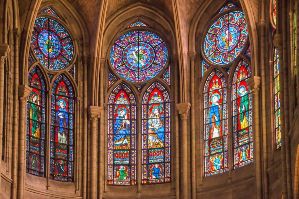
Newchurch has been using the devastating Holy Monday 2019 fire at Notre-Dame Cathedral in Paris as an excuse to attempt "modernize" the 12th-century masterpiece of Catholic art and architecture. Newchurch officials and French President Emmanuel Macron are still supporting a move to replace some of the cathedral's historic stained-glass windows, which survived the fire, with modernistic detritus.
The French heritage association Sites and Monuments is fighting Newchurch tooth and nail. On April 27, 2026, the association filed an emergency appeal to the Paris Administrative Court. Even some rank-and-file Newchurchers have joined a surprisingly large number of critics in condemning the desecration to replace the historic windows at a cost of some 5,000,000 USD with modernistic dross by radical French artiste Claire Tabouret. 340,000 people have already signed the petition against the modernistic replacement.
Unfortunately, outgoing French President Emmanuel Macron, "initiated" (formerly "baptized") as a Newchurcher in 1989 and then becoming an apostate agnostic, is Hell-bent on leaving his modernistic mark on the restored cathedral. He even wanted to replace the famous spire. The French people, and the world as a whole, gave him a resounding Non!, and the project was scrapped. [Some information for this Commentary was contributed by the National Catholic Register.]
Traditional Catholics, to replace the traditional stained-glass windows would be outright conversion (embezzlement) of funds that many around the world donated to the restoration project, about which Newchurch officials and Emmanuel Macron lied, promising that the historic cathedral would be restored to its original state. There is nothing new about such embezzlements. In the United States the U.S. Conference of Catholic [Sic] Bishops and the counterfeit Catholic [Sic] Charities are both going to face the federal courts on charges amounting to widespread embezzlement of funds. All this gives even more credence to the account that it was a Newchurcher seen in the cathedral just before the fire started who was the arsonist.
May 16, 2026 - St. Ubaldus, Bishop & Confessor
Semidouble Feast
Attacks by Israelis Are Escalating against Christians In Jerusalem
The Israeli Government Has Been Slow to React while It Rakes in Christian Tourism Money
From: The TRADITIO Fathers
An Israeli Wearing a Jewish Kipah
Spits on a Christian in Jerusalem
These Incidents Are Increasing
Without the Israeli Government Taking Action
It Finally Got So Bad that the U.S. Ambassador
To Israeli Lodged a Formal Protest
With the Netanyahu Government
And Lucrative Christian Tourism Money
Raked in by Israel Was Threatened
Israeli soldiers torturing Christians, Iraelis spitting on Christians in the street, Christian Holy Week services shuttered at the Church of the Holy Sepultchre -- it seems these days that the Israeli government has been conducting some kind of pogrom against Christians. On April 28, 2026, an Israeli man attacked a religious sister in Jerusalem, pushing her to the ground, then going back to kick her. The man was wearing tasseled clothing used by observant Jews.
Attacks are escalating against Christians and Christian institutions in Jerusalem. In 2025 alone, almost 200 incidents of assault, harassment, and vandalism targeted at Christians were reported in the Holy City. [Some information for this Commentary was contributed by LS News.]
Traditional Catholics, although authorities, including Newchurch's impotent Latin Patriarchate of Jerusalem and the U.S. Ambassador to Israel, Mike Huckabee, have protested even to Israeli Prime Minister Benjamin Netanyahu, the Israeli government has been slow to react, while it continues to rake in large sums from tourists to the Holy Land and from Evangelical/Pentecostal Christians.
May 15, 2026 - St. Jean Baptist de la Salle, Confessor
Double Feast
Respected Pew Research Center Reports that Newchurch Is Dying around the World
Catholics in Childhood Are Rapidly "Switching" out of the Counterfeit Newchurch
From: The TRADITIO Fathers
According to the Latest
Pew Research Center Study
Newchurch Is in Freefall around the World
More Newchurchers
Particularly in Latin America, Africa
And Western Europe
Are Abandoning Newchurch
Than Are Entering It
Newchurchers in Childhood
Are Becoming Protestants
Or "Nones" (No Affiliation) in Adulthood
However, Some Have Become
Formal Traditional Catholics
Attending the Traditional Latin Mass
And Traditional Latin Sacraments
Entirely outside Newchurch
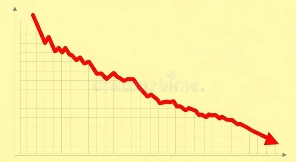
The respected Pew Research Center, which has been studying religious trends for over 20 years, on April 23, 2026, issued a devastating report for the counterfeit Synodal Newchurch of the New Order: more adults abandon Newchurch than enter it in most countries. Much of the loss comes from what the survey calls "switching," which occurs when Newchurchers identify with a different religion in adulthood from the one in which they were raised in as a child.
Most Catholics before the Vatican II Anti-council used to be "lifelong Catholics," but now most have abandoned the institutional (New)church, becoming Protestants or "nones" (no affiliation). However, some have become formal Traditional Catholics, attending the Traditional Latin Mass and Traditional Latin Sacraments entirely outside the Newchurch. [Some information for this Commentary was contributed by the National Catholic Register.]
Traditional Catholics, in the United States barely half of those raised Catholic, mostly before Newchurch of the New Order replaced the Catholic Church as the "institutional" Church in 1964, have remained in Newchurch. Ironically, more Newchurchers in Latin America have abandoned Newchurch. Africa has also seen large abandonment, as has Western Europe. Newpope Prevost-Leo and his Synodal Newchurch have only been whistling through the graveyard as their Newchurch goes into its deserved demise, as it is most certainly NOT the Catholic Church. And now more and more people are recognizing this indisputable fact.
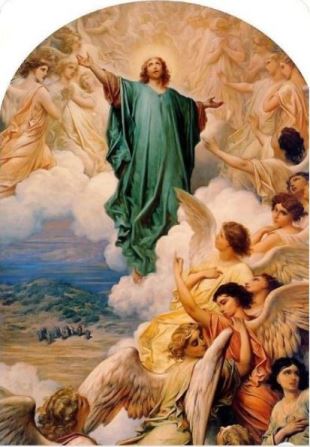
MAY 14, 2026 - THE ASCENSION OF OUR LORD - ASCENSION THURSDAY
DOUBLE FEAST OF THE FIRST CLASS
HOLYDAY OF OBLIGATION
"The Ascension"
By Gustave Dore, 1879
Oil on Canvas, 610 x 420 cm
"Et Dominus quidem Iesus,
postquam locutus est eis,
assumptus est in caelum,
et sedet a dextris Dei."
[And the Lord Jesus,
after he had spoken to them,
was taken up into heaven,
and sitteth on the right hand of God.]
Mark 16:19
From the Gospel of the Feastday
Of the Ascension of Our Lord
May 13, 2026 - St. Robert Bellarmine, Bishop, Confessor & Doctor - Rogation Day - Lesser Litanies
Double Feast
A Presbyter Known as "El Diablo" Had an Illicit Affair with a Married Newparishioner
Which Has Led to a 1,000,000 USD Lawsuit against the Newdiocese of Brownsville, Texas
From: The TRADITIO Fathers
A Brownsville, Texas, Presbyter
Has Been Charged with Conducting
A 15-year Affair
With the Wife of a Newparishioner
Which Led to Neglect
Of Her Five Children
The Presbyter Became Known As
"El Diablo," The Devil
One of the signs that the Synodal Newchurch of the New Order is most certainly NOT Catholic is that it is not pro-family. It winks at sodomy and other sex crimes by its presbyters against children, turns a blind eye to abortion, encourages transexuality in confused children, and shrugs off its presbyters' illicit affairs with women (not to speak of men) in its Newparishes.
A recent case in point. A lawsuit for over 1,000,000 USD in damages has been entered against Newchurch in Brownsville, Texas, by a husband and father who charges that a presbyter there had a 15-year illicit affair with his wife, a Newparishioner. The affair caused a divorce and neglect of her five children. The immoral presbyter was so evil as to became known as "El Diablo," the Devil. [Some information for this Commentary was contributed by the Progress Times.]
Traditional Catholics, Newchurch has learned nothing from its continuing Great Sex & Embezzlement Holocaust. The Newdiocese of Brownsville did exactly what has driven Newchurch dioceses into bankruptcy, has forced the shutdown of a majority of its Newparishes, and has thrown a number of its presbyters into prison: transferring miscreant presbyters to another Newparish, where they can continue their predations.
May 12, 2026 - St. Nereus & Companions, Martyrs - Rogation Days - Lesser Litanies
Semidouble Feast
Newcardinal Refuses Newpope Prevost-Leo's Command to Abdicate
As Chaos Breaks out in the African Newchurch
From: The TRADITIO Fathers
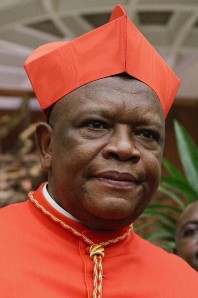
Not a Newcardinal to Be Taken Lightly
For Muddy Reasons Newpope Prevost-Leo
Is Trying to Force Dieudonne Nzapalainga
Of the Central African Republic
To Abdicate, but Nzapalainga Has Refused
And Prevost Is Impotent to Do Anything about It
As He Sees His Fancied "Ecclesial Unity"
And "Fraternal Cooperation" Shot to Hades
It seems that the world has figured out that Prevost-Leo is a pretender to the counterfeit Newpapacy, who has no authority. Recently, the Transalpine Redemptorists have cut him off, the Neo-Society of St. Pius X is about to cut him off, and now his own Newcardinal Dieudonne Nzapalainga, of the Central African Republic, refused on April 25, 2026, Prevost's command for him to abdicate.
Nzapalainga was created a Newcardinal by Newpope Bergoglio-Francis in 2016 at the age of 49, becoming at the time one of the youngest Newcardinals. Newchurch in Central Africa is now in an uproar, as Newvatican has been as clear as mud about why Prevost is attempting to force Nzapalainga to abdicate. [Some information for this Commentary was contributed by Katolisches.]
Traditional Catholics, the counterfeit Newpope Prevost-Leo's impotence is now apparent for the whole world to see. His fancied "ecclesial unity" and "fraternal cooperation" are now shot to Hades. He has been powerless to expel the Newcardinal. Instead Prevost has created three new Newdioceses to get around the determined Newcardinal. But, as the legal maxim goes, possession is nine-tenth of the law, and the Newcardinal has the money and the people.
May 11, 2026 - Ferial Day - Rogation Day - Lesser Litanies
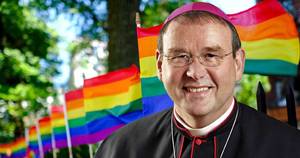
Newpope Prevost-Leo Confirms Bergoglio-Francis's Blessing of Sodomites
As Well as "Couples of All Gender Identifies," Such as Transsexuals
From: The TRADITIO Fathers
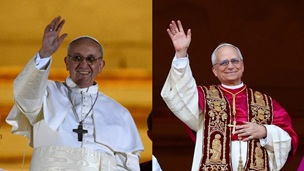
Brothers from Different Mothers
Newpopes Bergoglio-Francis (Left)
And Prevost-Leo
Both Apostates from the Catholic Faith
Prevost Has Now Doubled Down
On Bergoglio's "Fiducia Supplicans"
Which Permits "Blessing" of Sodomiates
And "Couples of All Gender Identities"
Such as Transsexuals
The Only Unnatural and Immoral Relationships
That Seem to Be Excluded Are
Polygamy and Bestiality
Any notion that the counterfeit Newpope Prevost-Leo will reverse for Newchurchers all of the immoral doctrines of his predecessor Newpope Bergoglio-Francis was blown out of the water on May 4, 2026, when Prevost's own Dicastery of the [New Order] Faith, issued a confirmation of the Bergoglio-era 2023 decree Fiducia supplicans, which introduced the blessing of "homosexual and other irregular couples," as well as "couples of all gender identities," such as transsexuals. The only unnatural and immoral relationships that seem to be excluded from Newchurch blessing are polygamy and bestiality.
The dicastery was at pains to state that such "blessings" are not "a form of moral legitimization to a union that presumes to be a marriage or to an extra-marital sexual practice ... nor to those who claim the legitimization of their own status." Yet here it is. As usual with the apostate Newchurch and its officials, the words do not match the actions. [Some information for this Commentary was contributed by LS News.]
Traditional Catholics, even prominent Newcardinals have publicly stated that Bergoglio's, and now Francis's, sodomitic blessings "contradict Catholic teaching and lead to heresy ... containing a denial of Catholic doctrine." In other words, the Newpopes are apostates from the Catholic Faith, and the Synodal Newchurch of the New Order that they head is most certainly NOT the Catholic Church.
May 10, 2026 - Fifth Sunday after Pentecost
Semidouble Sunday
Newchurch Continues Its Great Embezzlement Holocaust Unabated by Prevost-Leo
Now Laypeople Have Become Involved in Newchurch's Widespread Corruption
From: The TRADITIO Fathers
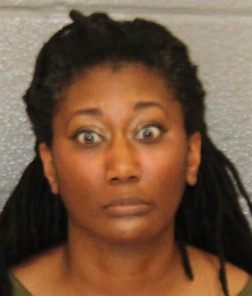
Mugshot of Newchurcher Leah Stewart
A Supervisor for "Catholic Charities"
Which Is neither Catholic nor a Charity
Now Lay Newchurchers
Have Turned into Embezzlers
Under the Corrupting Influence
Of the Newchurch of the New Order
Stewart Spent the Embezzled Funds
On Her Personal Expenses
Including the Upkeep of Her High-end
Automobile, a Mercedes-Benz!
As the scandal of "Catholic Charities," which is neither Catholic (it is Newchurch) nor a charity (it is a pass-through for embezzling funds), continues, Newchurch supervisor Leah Stewart for the "charity" has been arrested on April 17, 2026, in the Newdiocese of Charlotte, North Carolina, on charges of embezzling funds intended for disaster victims. So much for the "charitable" Synodal Newchurch of the New Order. The Newchurcher made numerous purchases for herself from charitable funds. She was also charged with money laundering, as "Catholic Charities" is currently being investigated by the U.S. Federal Bureau of Investigation for acting as a "pass-through" organization in embezzling government funds.
Stewart spent the money on purchases for herself, money that was supposed to be going toward housing and financial assistance for disaster victims in the recent hurricanes. She racked up a passel of personal expenses at the expense of the disaster victims: food for herself, her automobile insurance, her mobile phone bills, hotel rooms for her personal vacations, and repairs for her high-end Mercedes-Benz automobile. [Some information for this Commentary was contributed by WBTV3-Charlotte.]
Traditional Catholics, why anyone would put a dime into a Newchurch collection plate is inexplicable after widely-reported fraud and embezzlement by Newchurch from the Newpopes on down. These Newchurchers are not even contributing to the support of the Church because the Synodal Newchurch of the new Order is most certainly NOT the Catholic Church, but an apostate Counterfeit sect. If you doubt that, just ask the Transalpine Redemptorists!
May 9, 2026 - St. Gregory Nazianzen
Bishop, Confessor & Doctor of the Church
The "American" Counterfeit Newpope Prevost-Leo Criticizes His Own Country
But Incites Persecution of His Own Newchurchers in Atheist Communist China
From: The TRADITIO Fathers
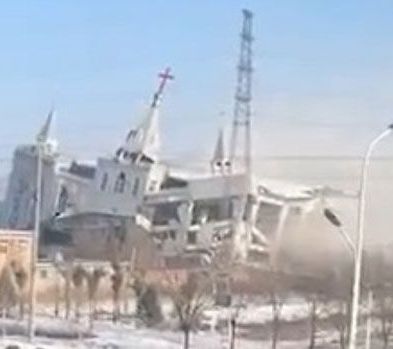
One of Hundreds of Newchurches
Demolished by the Communist Chinese
Aided by the Counterfeit Newpopes
Bergoglio-Francis and Prevost-Leo
Who Are Publicly Known to Have
Marxist Sympathies and Associations
The 2018 Newvatican's Concordat
With the Chinese Communist Party
Was the Nail in the Coffin
For Newchurch in Communist China
These days one has to wonder where counterfeit Newpope Prevost-Leo's loyalties lie. They certainly aren't with the Christian West, but, like his Marxist predecessor, counterfeit Newpope Bergoglio-Francis, with atheistic Communist China in the East, which have been increasingly cracking down on Newchurchers and Christians in general in a programme called "Sinicization," derived from the Latin word for China.
Ever since Bergoglio and now Prevost sold out to the atheistic Communists in the 2018 Condordat, with biennial renewals thereafter, the Red Chinese have implemented against Newchurch communities ideological control, strict surveillance, and travel restrictions. The government has destroyed thousands of Christian churches, invaded homes to destroy crucifixes, and arrested, tortured, and imprisoned Christians who resist.
In these tyrannical actions, Communist China has had no more staunch ally than the Newvatican, and the last two Marxist Newpopes in particular. Bergoglio openly admitted to his own Marxist sympathies, and Prevost since 1985 worked in Communist-leaning Peru, in which country he took out citizenship in 2015.
In addition, the Concordat essentially turned over the appointment of Newbishops to the atheistic Communist government. These Newbishops are now instrumental in forcing Red China's 12,000,000 Newchurchers to convert to the state-run Chinese Catholic [Sic] Patriotic Association and to pledge allegiance to the Chinese Communist Party. When Bergoglio was harshly challenged for his complicity with Communism, he simply blew off the criticism. [Some information for this Commentary was contributed by Human Rights Watch.]
Traditional Catholics, so bad has the situation become that the courageous, if misled, Newchurchers have stated that Newvatican itself has become just as bad as the Communists in persecuting them. Instead of taking atheistic Communism on, as did Pope Pius XII in his 1949 Decree Against Communism, which excommunicated Catholics who professed or actively supported communist doctrine as apostates from the Christian faith. The counterfeit Newpopes presumably fall under that condemnation and remain excommunicates from the Catholic Church.
May 8, 2026 - Apparition of St. Michael the Archangel
Double Major Feast
Huge New York Newarchdiocese Is Teetering on the Brink because of Its Sex Crimes
Unless It Can Find One Billion USD, It Is Going under, Says Newarchbishop Ronald Hicks
From: The TRADITIO Fathers
The Giant Headquarters Buildiing
Of the Newchurch Archdiocese of New York
Went onto the Auction Block
And Will Now Become Upscale Apartments
The Newarchiocese Has Racked up a Tab
Of One Billion USD for Its Sex Crimes
Against Children and Is Now in a Mad Selloff
To Avoid What Appears to Be
An Impending Bankruptcy and Demise
The secret is out, and it has shocked the Newchurch in New York, from which the truth has been hidden for years. Newarchbishop Ronald Hicks announced at an emergency meeting on April 17, 2026, that so many presbyters and Newbishops have gone on paedophile sex binges, condoned by the corrupt Newchurch hierarchy, as a result the Newarchdiocese has racked up 1,000,000,000 USD in judgments against it. The now-deadbeat Newarchdiocese cannot pay the tab for its crimes, which has only itself to blame for its demise.
Hicks announced that unless the billion dollars can be purloined from its own parishes, schools, and churches, the Newarchdiocese is going down for the count. In the last two years the Newarchdiocese has been selling off its real estate and cutting expenses, including its headquarters building on First Avenue and its New York Palace Hotel, but the amount recovered is pitifully short of the total needed to save the Newarchdiocese from its sex crimes. Bankruptcy is the final "nuclear option" that would lead to the demise of the Newarchdiocese. [Some information for this Commentary was contributed by Catholic news sources.]
Traditional Catholics, the final nail in the coffin of Newchurch in New York is a lawsuit entered by Chubb Insurance, which refuses to pay off for Newchurch's paedophile sex crimes because the Newarchdiocse knew about the crimes for years and covered them up. As the Newarchdiocese has discovered, an All-just God's justice eventually roots out even the most secret crimes. None of the corrupt Newchuchers -- Newbishops, presbyters, or laymen -- will escape it.
May 7, 2026 - St. Stanislaus, Bishop & Martyr
Double Feast
Redemptorists Break with Newpope Prevost-Leo and his Vatican II Anti-council Predecessors
"He's No Pope," They Say of Prevost, Ratzinger, Wojtyla, Luciani, and Montini
From: The TRADITIO Fathers
The Transalpine Redemptorists
Have Forsworn the Synodal Newchurch
Of the New Order as Counterfeit
And the Post-Vatican II Anti-council's Newpopes
As Apostates from the Catholic Faith and Not Popes
They Offer only the Traditional Latin Mass
And Traditional Latin Sacraments
Totally outside of the Synodal Newchurch
On May 2, 2026, the break of Traditional Catholics from the counterfeit Synodal Newchurch of the New Order took its latest step as the Transalpine Redemptorists declared that all the post-Vatican II Anti-council's Newpopes (Prevost-Leo, Ratzinger-Benedict, Wojtyla-JPII, Luciani-JPi, and Montini-Paul VI) are not, in fact, popes of the true Roman Catholic Church, but pretenders. The Redemptorists join Traditional Catholic priests, bishops, and organizations that have in the years since 1964 declared invalid the Newchurch of the New Order, which was formed at the Vatican II Anti-council in that year to replace the "institutional" Church and drive the true Catholic Church "into the catacombs," as Pope Pius XII predicted would happen.
This is not properly called a"schism" any more than is the Lutheran sect, as the Synodal Newchurch of the New Order is most certainly NOT the Catholic Church. Rather, the Newchurch sect is apostate from the Catholic Faith and lacks the four required marks of the true Church: "unam, sanctam, catholicam, et apostolicam Ecclesiam" (one, holy, catholic, and apostolic Church). The true Catholic Church remains now in the thousands of Traditional Catholic churches, chapels, and oratories around the world and with the Traditional Catholic clergy who will have nothing to do with the counterfeit Synodal Newchurch.
Inside reports now indicate that Prevost is likely to Novus Ordo "excommunicate" from his Newchurch the bishops of the Neo-Society of St. Pius X, which ironically was reorganized in 1994 after the death of the SSPX's original founder, Archbishop Marcel Lefebvre, into a New Order-bound organization. Two of the Neo-SSPX bishops have died, and the other two are in their later years. Without new bishops the Neo-SSPX will die. Of course, it cannot be said that since the death of Abp. Lefebvre, the Neo-SSPX remained truly traditional under the regime of Bernie Fellay and his puppet Davide Pagliarani. [Some information for this Commentary was contributed by LS News.]
The Redemptorists apologized to true Catholics for knuckling under and reconciling in 2012 with the counterfeit Newchurch of the New Order. They proclaimed: "There has been a great mistake on our part to think that the hierarchy of the Novus Ordo [Newchurch of the New Order] was sufficiently Catholic for us to operate under its command." Already by October 2025 the Redemptorists had come to regret their reconciliation. They accused Newchurch of betraying the Catholic Faith and now offer only the Traditional Latin Mass and Traditional Latin Sacraments totally outside of the Synodal Newchurch.
Deo volente, the Redemptorists' rejection of the Synodal Newchurch and its Newpopes as being counterfeit will serve as a courageous example to the Neocon Newchurchers, who mouth a corruption of traditionalism, but don't have the guts to cut the cord completely with the fake Synodal Newchurch.
May 6, 2026 - St. John, Apostle & Evangelist
Double Major Feast
German Newbishop Schepers: Sodomy Is "Part of God's Design for Creation"
As Is the "Diversity of Sexes," however Many Sexes He Thinks there Are!
From: The TRADITIO Fathers
Ludger Schepers
Newbishop of Essen, Germany
Appointed by Newpope Ratzinger-Benedict
Is the "Queer Affairs Representative"
Of the German Bishops' Conference
He Has Proclaimed the Heresies
That Sodomy Is Part of God's Plan
And that There Is "Diversity of Sexes"
Homosexual, Transgender, Intersex, et Al.
He Represents the Apostasy of His Conference
And the Counterfeit Newpopes after Vatican II
The apostate Counterfeit Newpope Bergoglio-Francis proclaimed that God created heretic religions, and it didn't much matter what religion one followed. On April 9, 2025, the apostate Counterfeit German Newbishop Ludger Schepers, of Essen, Germany, took that heresy one step farther into the moral plain and proclaimed that sodomy is "part of God's plan of creation." He also rejects the doctrine of two sexes, male and female, and accepts whatever "identity" people want to claim.
Newbishop Schepers should know. He is the designated "Queer Affairs Representative" of the German Bishops' Conference. He advocates the "diversity" of sexes: homosexual, transgender, intersex, et al. He demands that the Synodal Newchurch of the New Order accept "queer people" and include "all genders," whatever those may be. [Some information for this Commentary was contributed by LS News.]
Traditional Catholics, it is clear that Newbishop Schepers has never read the Bible, particularly the first chapter of St. Paul's Epistle to the Romans. Or maybe he has, but he wants to make up his own religion, as the Arch-heretic Martin Luther did. And Schepers is not alone. The Counterfeit Newpopes since the Vatican II Anti-council (1962-1965) all hold these apostate beliefs to one degree or another.
May 5, 2026 - St. Pius V, Pope & Confessor
Double Feast
Oakland, California, Is the Latest Newchurch Diocese to Fall
Its Newbishop, Already in Bankruptcy, Has Announced the First Tranche of Newparish Closures
From: The TRADITIO Fathers
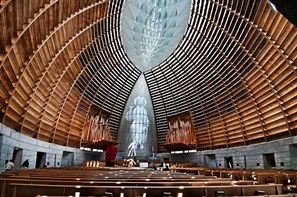
Oakland's Newcathedral, Disparagingly Called
"Christ the Extraterrestrial"
From the Glass-and-Aluminum Alien Image
Installed against the Back Wall
Cost the Newdiocese over 200,000,000 USD
And Has Thrown the Newdiocese into Bankruptcy
Enormous Financial Judgments
For Hundreds of Paedophile Sex Crimes
Perpetrated by the Newdiocese's Presbyters
Have also Caused Widespread Shutdowns of Newparishes
The Newchurch diocese of Oakland, California, currently in bankruptcy, is the latest to announce substantial shutdowns of operations. The initial tranche of shutdowns announced by Newbishop Michael Barber on April 28, 2026, is 12 Newparishes and one Pastoral Center. More are likely to come.
The Newdiocese faces estimated civil judgments 100,000,000-500,000,000 USD. Oakland joins San Diego, Stockton, Santa Rosa, San Francisco, and Fresno in California in going bankrupt and shutting down operations. On April 22, 2026, a jury awarded a 16,000,000 USD verdict against the Newdiocese to a 10-year-old "altar" boy, who was twice sexually assaulted by an Oakland paedophile presbyter. This verdict is expected to set off a series of similar awards.
Oakland has been beset by a remarkable level of financial mismanagement. Former Newbishop John Cummins racked up an extravagant expenditure of over 200,000,000 USD in 2005 to build an unnecessary monstrosity of a Newcathedral, disparagingly called by locals Christ the Extraterrestrial because of its giant glass-and-aluminum image looking like an alien on the back wall.
Oakland and its Newbishops have also been awash with corruption of all sorts, mainly hundreds of paedophile sex crimes perpetrated by the Newdiocese's presbyters, leading to enormous financial judgments against the Newdiocese. Disgusted by the Newchurch corruption, Oakland Newchurchers, as in other Newdioceses, have largely stopped attending the New Mess. At a recent Sunday service at the Newcatheral, only about 50 showed up. Newparochial school enrollment has sunk, and the number of presbyters has shrunk to the lowest level yet. [Some information for this Commentary was contributed by the San Francisco Chronicle.]
Traditional Catholics, with Oakland Newchurchers seething that mismanagement and Newclerical crime has brought about the shutdown of their churches, Newbishop Michael Barber seemed to blow off concerns about the shutdowns. "While we love our local church buildings, the church has never been solely a building." It's just that attitude that has been driving Newchurchers away from the Synodal Newchurch of the New Order. And, you know, for all the platitudes that Newbishops like Barber prattle, the truth of the matter may be that they don't really care at all if their Newchurch goes under.
May 4, 2026 - St. Monica, Widow
Double Feast
The Synodal Newchurch Goes to the Dogs -- Literally!
As European Newchurch Gives Its "eucharist" to Dogs
From: The TRADITIO Fathers
In Europe Newchurch Is Now Allowing
Its "eucharistic" Cookies to Be Given to Dogs
But Don't Blame the Dogs
It's the Newpope, Newbishops, and Presbyters
Of the Counterfeit Synodal Newchurch
Who Allow Blasphemy, Sacrilege, and Idolatry
Without Penalty
Even though Sacred Scripture Specifically Provides:
"Give Not That Which Is Holy to Dogs"
On October 4, 2025, Newchurch went to the dogs -- literally. Newchurchers, 80 per cent of whom, as many surveys have shown, do not believe that the Newchurch "eucharist" is a valid sacrament, were caught giving the Novus Ordo cookie to their dogs at the invalid, Protestant-Masonic-Pagan Counterfeit New Mess. This latest sacrilege took place in the Newdiocese of Chur, Switzerland. The Newbishop there has announced on April 17, 2026, after a cursory investigation that no sacrilege had taken place, and so excommunications will not be imposed.
Newbishop Joseph Bonnemain concluded essentially that the Newchurchers who committed this objectively sacrilegious act were too stupid to know what they were doing. And whose fault is it but that of the Synodal Newchurch of the New Order, which deliberately keeps its followers ignorant of Catholic teaching? Sacred Scripture even addresses this sacrilege literally: "Nolite dare sanctum canibus" [Give not that which is holy to dogs] (Matthew 7:6/DRV). [Some information for this Commentary was contributed by LS News.]
Traditional Catholics, the key to the apostasy of Newchurch is to look at what its sectarians, from the Counterfeit Newpope on down, do, not what they say, most of which is doubletalk meant to confuse. Here the Newchurchers, trained by the words of the Newpope and his Newbishops, have gotten the message: Newchurch no longer has the Catholic Sacraments. Novus Ordo "sacraments" are meaningless and graceless, fit only for dogs. And that is the simple truth of the matter: Newchurch is most certainly NOT the Catholic Church.
MAY 3, 2026 - FINDING OF THE HOLY CROSS
DOUBLE FEAST OF THE SECOND CLASS
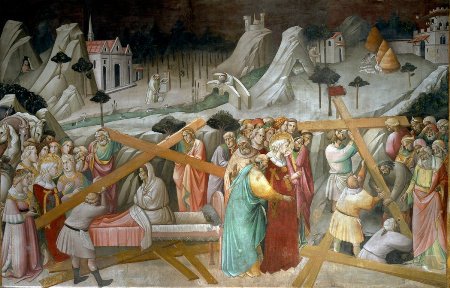
"St. Helena Discovers the Holy Cross" (1380)
By Agnolo Gaddi (1350-1396)
Fresco
Church of Santa Croce, Florence, Italy
"Sed semetipsum exinanivit, formam servi accipiens,
in similitudinem hominum factus, et habitu inventus ut homo.
Humiliavit semetipsum factus obediens usque ad mortem,
mortem autem crucis. "
["But emptied himself, taking the form of a servant,
being made in the likeness of men, and in habit found as a man.
He humbled himself, becoming obedient unto death,
even to the death of the cross."]
Philippians 2:7-8
From the Epistle of the Feastday
May 2, 2026 - St. Athanasius, Bishop, Confessor & Doctor
Double Feast
Counterfeit Newpope Prevost-Leo Joins Anglican Schismatics in St. Peter's Archbasilica
Embraces the New Heretic Anglican Archbishopess of Canterbury and Allows Her to Perform Blasphemous "Blessing"
From: The TRADITIO Fathers
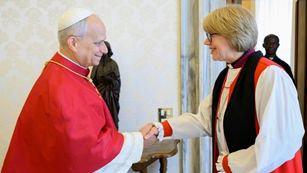
From One Heretic to Another
Counterfeit Newpope Prevost-Leo
Welcomes the Heretic Archbishopess of Canterbury
To St. Peter's Archbasilica and Invites Her
To Give a Blasphemous "Blessing"
At the Very Tomb of St. Peter
Even the Anglicans Don't Accept Mullalley
The Traditionalist GAFCON Conference
Which Represents 80 per Cent of Anglicans
Has Rejected Her Appointment
And Does Not even Recognize Her as an Anglican
Day by day, it becomes clearer and clearer that Counterfeit Newpope Prevost-Leo was a plant by the Bergoglians to push the Synodal Newchurch of the New Order, which is most certainly NOT the Catholic Church, into a level of apostasy that could not be believed even in May 2025, when he was elected to head the Synodal Newchurch. Recently, he tried to become an Eastern Orthodox schismatic on his junket of November 2025 to Turkey, when he met with the schismatic so-called Oecumenical Patriarch Bartholomew I. The Eastern Orthodox are still wary of Newchurchers, so nothing concrete came out of the meeting, though Leo really wanted a membership card in the Orthodox sect.
So, on April 20, 2026, Prevost took his apostasy another step further by granting to the heretic new Archbishopess of Canterbury, Sarah Mullalley, an official audience and inviting her to conduct a blasphemous "blessing" in St. Peter's Archbasilica at the very tomb of St. Peter, whose authority she and Prevost reject. Prevost sent her off with a congratulatory letter for her\ election as the first female Archbishopess of Canterbury, which became a heretic see since its takeover in 1534 by the mad King Henry VIII.
Prevost made no reference to the fact that, firstly, according to the teaching of the Catholic Church Anglican orders are "absolutely null and utterly void" by decree of Pope Leo XIII in his Papal Bull "Apostolicae curae" and, secondly, the ordination of women is impossible and contrary the teaching and practice of Christ Himself. If you want to know what the Protestant-Masonic-Pagan Synodal Newchurch of the New Order will become, just look at the Protestant Anglicans of the Church of England. Historically, Newchurch has followed the apostasy and corruption of the Anglican sect in lockstep.
The appointment of Sarah Mullally as the first female Anglican Archbishopess of Canterbury and leader of the heretic Church of England, has caused public outcry and backlash. In 2025 the traditionalist Global Anglican Future Conference (GAFCON), said to represent some 80 per cent of Anglicans around the world, formally dissociated itself from the Church of England and rejected Mullally as being an apostate from the Christian faith. [Some information for this Commentary was contributed by LS News.]
Traditional Catholics, like the Synodal Newchurch of the New Order, the Anglican sect is being ripped apart by internal divisions between conservatives and leftists. Mullally herself is an apostate from the Christian faith, supporting the installation of priestesses, liberalized sexual morality, and the blessing of "gay" and lesbian "marriages." Newpope Prevost-Leo is in virtually the same situation, as his Newchurch has been falling apart from plummeting attendance and closing of Newseminaries; from paedophile presbyers, Newbishops, and Newcardinals; and from counterfeit (invalid) "liturgies," some of them staged in St. Peter's Archbasilica itself!
MAY 1, 2025 - STS. PHILIP AND JAMES, APOSTLES
DOUBLE FEAST OF THE SECOND CLASS
The May 1 Feast of "St. Joseph the Worker" is NOT traditional. It was concocted by the Freemason presbyter Hannibal Bugnini, the head of "liturgy" for the nascent Newchurch of the New Order and placed in the calendar in 1955, in conjunction with Communist May Day. The concocted new feast shockingly displaced on May 1 the traditional Feast of Sts. Philip & James, the Apostles of Our Lord Jesus Christ, and suppressed the traditional Solemnity of St. Joseph, Patron of the Universal Church, which had long been celebrated on the Wednesday after the Second Sunday after Easter.
The new May 1 Feast of St. Joseph the Workman ("Worker" in genderless "modernized" English) was widely reviled in the Church at the time by the highest authorities, and was derisively called the Feast of "Joe the Worker" or the "Pseudo-feast of San Giuseppe Comunista" by the Romans and others, as it fell on Communist May Day. The traditional Sacred Congregation of Rites rejected Bugnini's new feast, and there was open opposition in the Church to it. Opposition to the new feast was so strong that the Sacred Congregation of Rites refused for four years to formulate the Gregorian-chant Mass and Divine Office for the new feast.
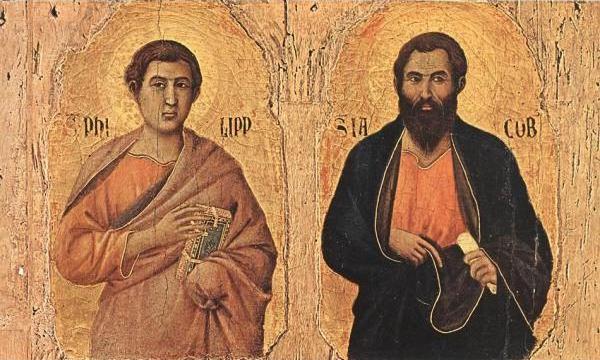
Sts. Philip & James, Apostles
Duccio di Buoninsegna (ca. 1255 - ca. 1318)
"In crastinum voluit exire in Galilaeam
et invenit Philippum.
Et dicit ei Iesus: Sequere me."
["On the following day, (Jesus) would go forth into Galilee:
and he findeth Philip.
And Jesus said to him: Follow me."]
John 1:43
From the Gospel of the Feastday
From the early Church the Holy Apostles Philip and James the Less (brother of St. Jude Thaddeus) have shared the same feast day, May 1, because the relics of the martyrs were solemnly translated from New Rome, i.e., Constantinople, by Pope Pelagius I to the Church of the Holy Apostles at Rome, where they still rest. St. Philip brought the Catholic Faith to Scythia. St. James the Less was author of the Epistle in the New Testament.


 For a free subscription to TRADITIO's RSS News Feed listing the
most current Daily Commentaries, enter
"https://www.traditio.com/rssfeed.xml"
into your Yahoo, Google, Microsoft, or other news aggregator.
For a free subscription to TRADITIO's RSS News Feed listing the
most current Daily Commentaries, enter
"https://www.traditio.com/rssfeed.xml"
into your Yahoo, Google, Microsoft, or other news aggregator.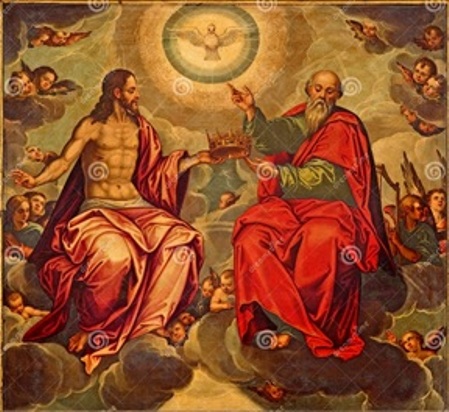








 Return to Daily Commentaries from the TRADITIO Fathers.